



Parasite
Antiparasitics are a class of medications which are indicated for the treatment of parasitic diseases such as nematodes, cestodes, trematodes, and infectious protozoa.
Parasite Isoform Specific Products
All Product Categories
-
Parasite Related Products (2499)
Related Products (2499)

-
Related Compound Screening Libraries (1)
-
Parasite Isoform Comparison
-
Nitenpyram-d3-1
 0 ImagesCat. No.: HY-B0820S1Nitenpyram-d3-1 is the deuterium labeled Nitenpyram (HY-B0820). Nitenpyram is a calss of neonicotinoid and an insect nicotinic acetylcholine receptor (nAChR) agonist with an IC50 of 14 nM. Nitenpyram is an oral fast-acting insecticide used to suppress sucking insects on companion animals.
-
Icariside E3
 0 ImagesCat. No.: HY-N19832CAS No.: 117613-74-8Icariside E3 is a Leishmania donovani DNA Topoisomerase IB (LdTOP1LS) inhibitor. Icariside E3 can be used for the research of leishmaniasis.
-
Cycloguanil-d6 nitrate
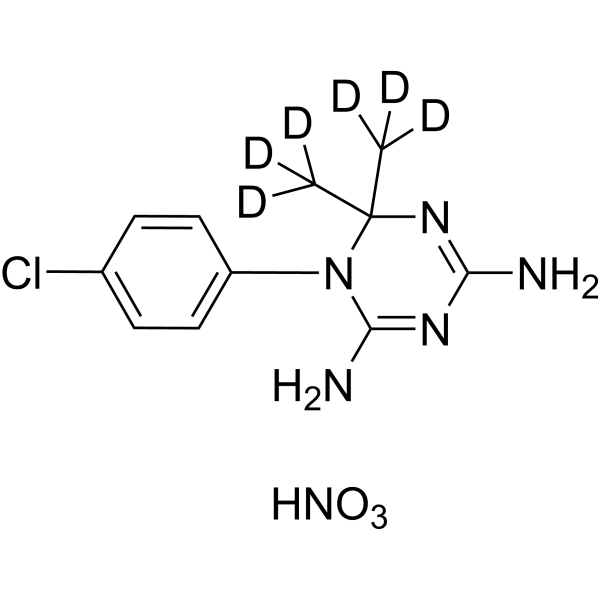 0 ImagesCat. No.: HY-12784S1CAS No.: 2070015-19-7Synonyms: Chlorguanide triazine-d6 nitrateCycloguanil-d6 (Chlorguanide triazine-d6) nitrate is the deuterium labeled Cycloguanil nitrate. Cycloguanil nitrate is a dihydrofolate reductase (DHFR) inhibitor with an IC50 of 10.8 μM against human DHFR. Cycloguanil nitrate blocks the folate metabolic pathway, thereby affecting nucleotide synthesis and interfering with DNA replication. Cycloguanil nitrate inhibits DHFR in Plasmodium and is thus used in malaria research. Cycloguanil nitrate also potently inhibits DHFR in human cancer cells and blocks the transcriptional activity of STAT3, thereby exhibiting anticancer activity.
-
Norbatzelladine L
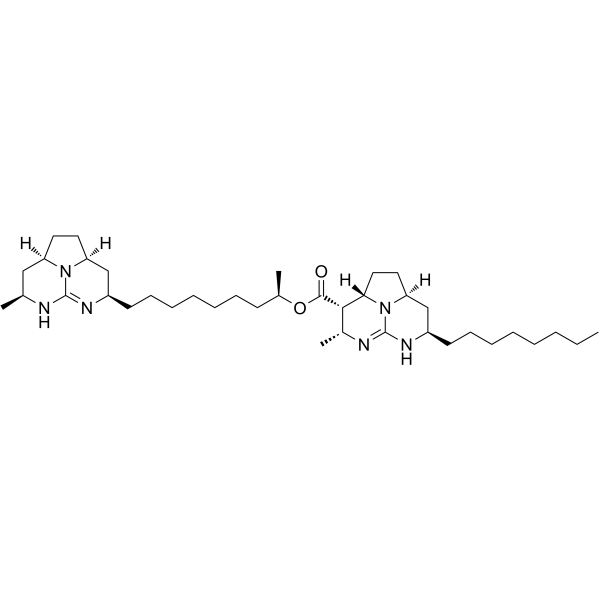 0 ImagesCat. No.: HY-N10402CAS No.: 1187954-93-3Norbatzelladine L (Compound 2) is an inhibitor of the catalytic and functional activity of Pdr5p transporter. Norbatzelladine L inhibits Pdr5p ATPase activity with an IC50 of 3.8 µM. Norbatzelladine L shows antifungal, antiparasitic, antiviral, antibacterial and antitumoral activities.
-
Pentamidine isethionate (Standard)
 0 ImagesSynonyms: MP-601205 isethionate (Standard)Pentamidine (isethionate) (Standard) is the analytical standard of Pentamidine (isethionate). This product is intended for research and analytical applications. Pentamidine isethionate (MP-601205 isethionate) is an antimicrobial agent and interferes with DNA biosynthetics. Pentamidine isethionate inhibits parasite Leishmania infantum with an IC50 of 2.5 μM. Pentamidine isethionate is a potent and selective protein tyrosine phosphatases (PTPases) and phosphatase of regenerating liver (PRL) inhibitor. Pentamidine isethionate has the potential for Gambian trypanosomiasis, antimony-resistant leishmaniasis, and Pneumocystis carinii pneumonia treatment. Antitumor and antibacterial activities.
-
SSJ-183
 0 ImagesCat. No.: HY-121804CAS No.: 1187533-34-1SSJ-183 is a compound with antimalarial activity, with activity that modulates antimalarial effects and pharmacokinetic properties. SSJ-183 has shown some activity in antimalarial studies, and its pharmacokinetic properties are between those of other tested compounds, which is of certain significance for the study of new antimalarial combination therapies.
-
Phenothiazine-d8
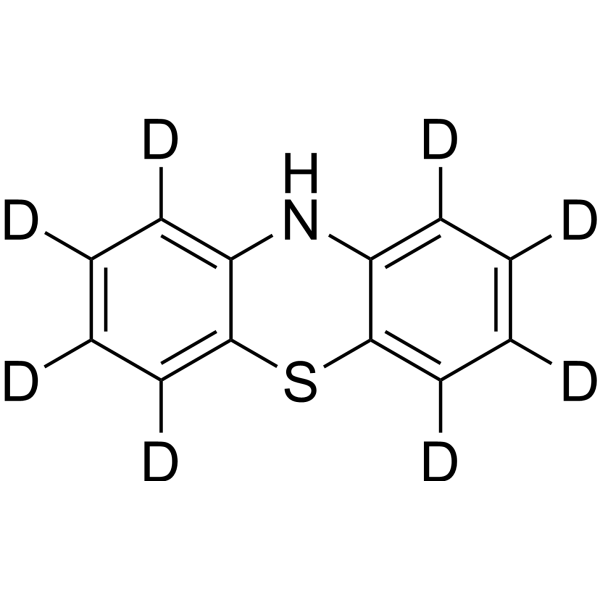 0 ImagesPhenothiazine-d8 is the deuterium labeled Phenothiazine. Phenothiazine is an antibiotic which has insecticidal, fungicidal, antibacterial and anthelmintic activities. Phenothiazine also can be used for the research of neurological diseases.

-
(S)-Dinotefuran
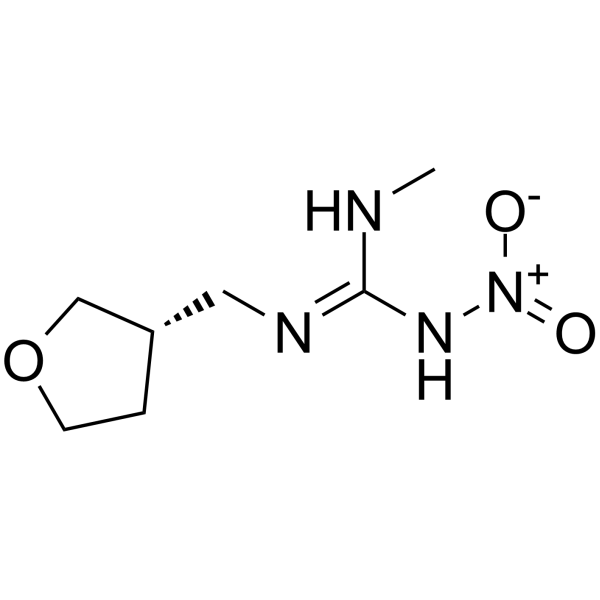 0 ImagesCat. No.: HY-B0827BCAS No.: 322639-07-6Synonyms: (S)-MTI-446(S)-Dinotefuran ((S)-MTI-446), a neonicotinoid pesticide, is toxic by binding to α8 subunit of nAChR of honeybee Apis mellifera (Apis mellifera Linnaeus). (S)-Dinotefuran shows more toxic than R-dinotefuran to honeybee Apis mellifera.
-
6,11,12,16-Tetrahydroxy-5,8,11,13-abitetetraen-7-one
 0 ImagesCat. No.: HY-N21530CAS No.: 1295650-67-76,11,12,16-Tetrahydroxy-5,8,11,13-abitetetraen-7-one is an abietane diterpenoid with antimicrobial and antiparasitic activities. It exhibits IC50 values of 3.0 and 4.8 μg/mL against Plasmodium falciparum strains D6 and W2, respectively, and inhibits the growth of Leishmania donovani with an IC50 of 12 μg/mL and an IC90 of 22 μg/mL. 6,11,12,16-Tetrahydroxy-5,8,11,13-abitetetraen-7-one can be used in studies related to fungal infections, staphylococcal infections, malaria and leishmaniasis.
-
SC83288
 0 ImagesCat. No.: HY-182309CAS No.: 1237645-43-0SC83288 is a Plasmodium falciparum PfDNMT2 inhibitor with an IC50 of 7 μM. SC83288 disrupts the epigenetic regulation of malaria parasites, blocks DNA replication and nuclear division, arrests the development of the asexual blood stage, induces the formation of pyknotic morphology in malaria parasites, and does not affect cytokinesis after nuclear division or parasite egress. SC83288 is applicable to malaria-related research.
-
Niranthin
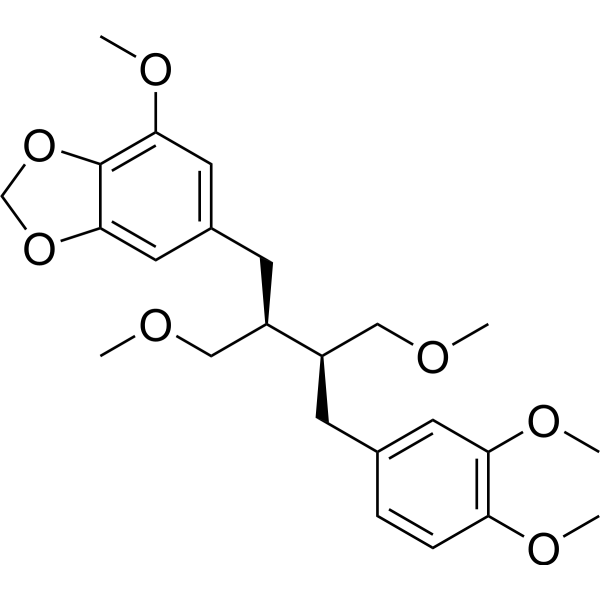 0 ImagesCat. No.: HY-N6054CAS No.: 50656-77-4Niranthin, a lignan with a wide spectrum of pharmacological activities. Niranthin is a potent and non-competitive inhibitor of heterodimeric type IB topoisomerase of L. donovani. Niranthin can be used for the research of drug-resistant leishmaniasis research.
-
Questin
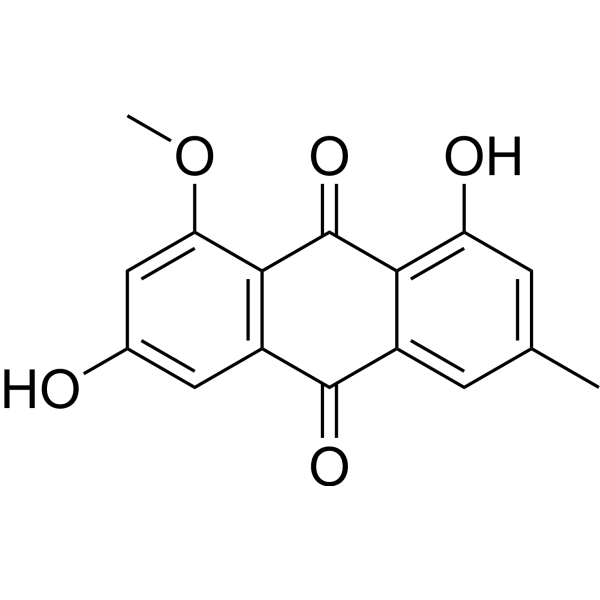 0 ImagesQuestin is an anthraquinone compound and antibacterial agent. Questin can be isolated from marine-derived fungi and plants. Questin inhibits Cdc25B phosphatase. Questin exhibits antibacterial activity against V. harveyi, V. anguillarum, V. cholerae, and V. parahemolyticus with MIC values of 31.25 µg/mL, 62.5 µg/mL, 62.5 µg/mL, and 125 µg/mL. Questin displays antiprotozoal activity against the animal protozoan pathogen Tritrichomonas foetus, with a MIC of 12.5 µg/mL. Questin has anticancer activity against lung and colon cancer.
-
Oxantel
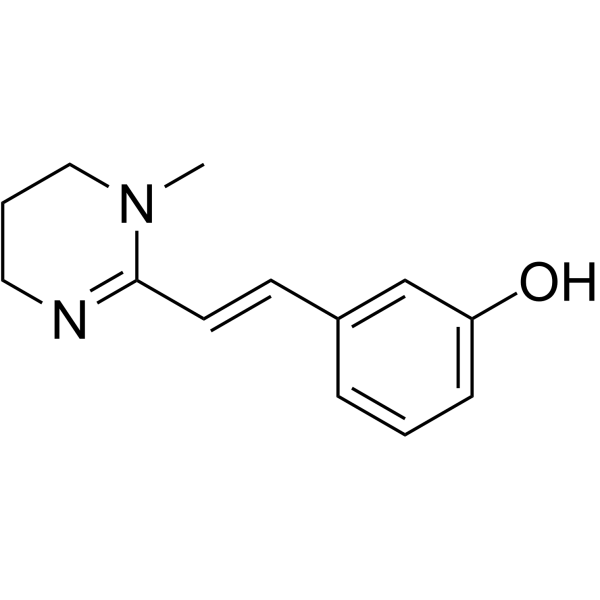 0 ImagesCat. No.: HY-124498CAS No.: 36531-26-7Synonyms: CP-14445Oxantel (CP-14445) is an anthelmintic agent that potently against Trichuris muris. Oxantel inhibits fumarate reductase (Frd) activity in some pathogenic bacteria and inhibits P. gingivalis homotypic biofilm formation (IC50 of 2.2 μM).
-
rel-Bornyl cinnamate
 0 ImagesCat. No.: HY-N18199CAS No.: 41755-67-3rel-Bornyl cinnamate is an anti-schistosomal agent. rel-Bornyl cinnamate induces round, dark morphological changes, followed by degeneration in Schistosoma mansoni schistosomula. rel-Bornyl cinnamate can be used for the research of schistosomiasis.
-
D-Arabinose-d5
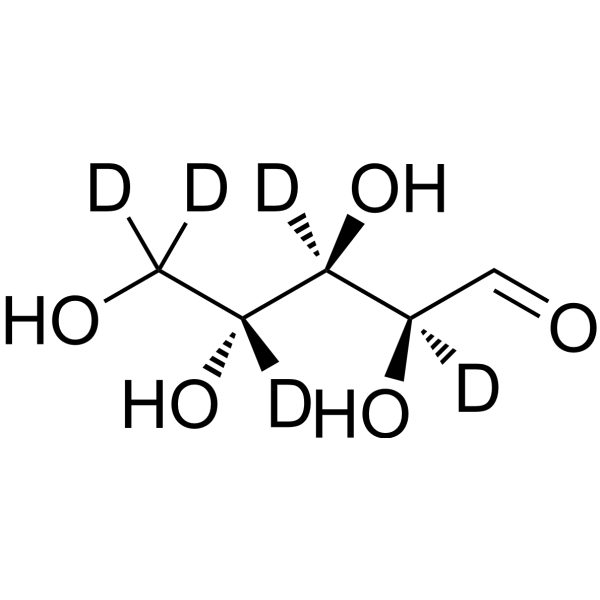 0 ImagesCat. No.: HY-N0059S5D-Arabinose-d5 is the deuterium labeled D-Arabinose (HY-N0059). D-Arabinose is is an orally active antidepressant and a growth inhibitor of C. elegans (IC50 is 7.5 mM). D-Arabinose can penetrate the blood-brain barrier, selectively interfere with the metabolism of D-ribose and D-fructose, and inhibit the growth of nematodes. D-Arabinose can also inhibit the synthesis of cell biofilm and exert antibacterial activity. D-Arabinose activates the ACSS2-PPARγ/TFEB-CRTC1 axis through the lysosomal AXIN-LKB1-AMPK pathway, inducing CRTC1 transcription, exerts antidepressant-like activity. D-Arabinose is the ring-opened form of the aldopentose D-?Arabinose (HY-N7082).
-
Paromomycin sulfate (Standard)
 0 ImagesParomomycin (sulfate) (Standard) is the analytical standard of Paromomycin (sulfate). This product is intended for research and analytical applications. Paromomycin (Aminosidine) sulfate, a neomycin (HY-B0470) derivative, is a broad spectrum aminoglycoside antibiotic with amebicidal and bactericidal effects. Paromomycin sulfate prematures termination of translation of mRNA and inhibits protein synthesis?by specifically binds to the RNA oligonucleotide at the A site of bacterial 30S ribosomes. Paromomycin sulfate can be used for the research of bacterial and parasitic infections.
-
A110
 0 ImagesCat. No.: HY-120489CAS No.: 1185388-35-5A110 is the inhibitor for Cryptosporidium parvum inosine monophosphate dehydrogenase (CpIMPDH). A110 inhibits CpIMPDH in Toxoplasma gondii with IC50 of 18 nM. A110 exhibits pro-parasitic efficacy and cause parasitemia.
-
GSK932121
 0 ImagesCat. No.: HY-19877CAS No.: 958457-44-8GSK932121 is an antimalarial drug with activity that inhibits the electron transport chain of P. falciparum. GSK932121 acts selectively on this pathogen at the level of cytochrome bc1 (complex III). The synthesis method of GSK932121 is highly efficient, and the final structure can be obtained in only 5 steps. The synthesis of GSK932121 can be prepared atKilog scale to support clinical studies.
-
Aphadilactone C
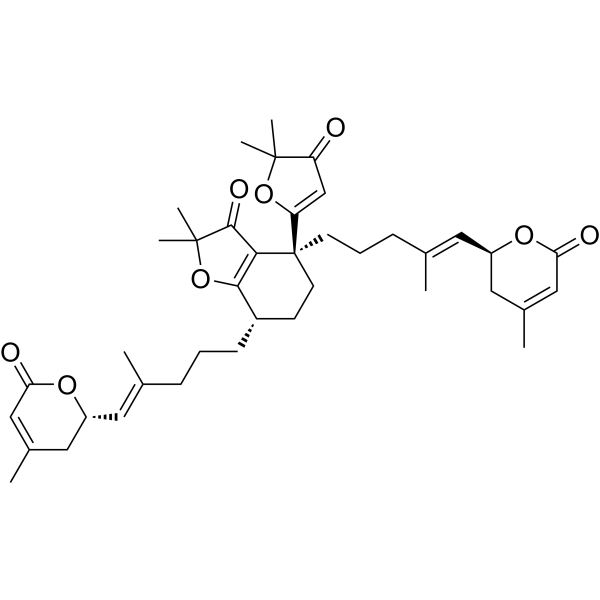 0 ImagesCat. No.: HY-N7281CAS No.: 1522004-70-1Aphadilactone C is a potent and selective DGAT-1 inhibitor with an IC50 of 0.46 μM. Aphadilactone C shows significant antimalarial activities with an IC50 value of 170 nM.



